UI / UX Design
Blending Business and Sustainability
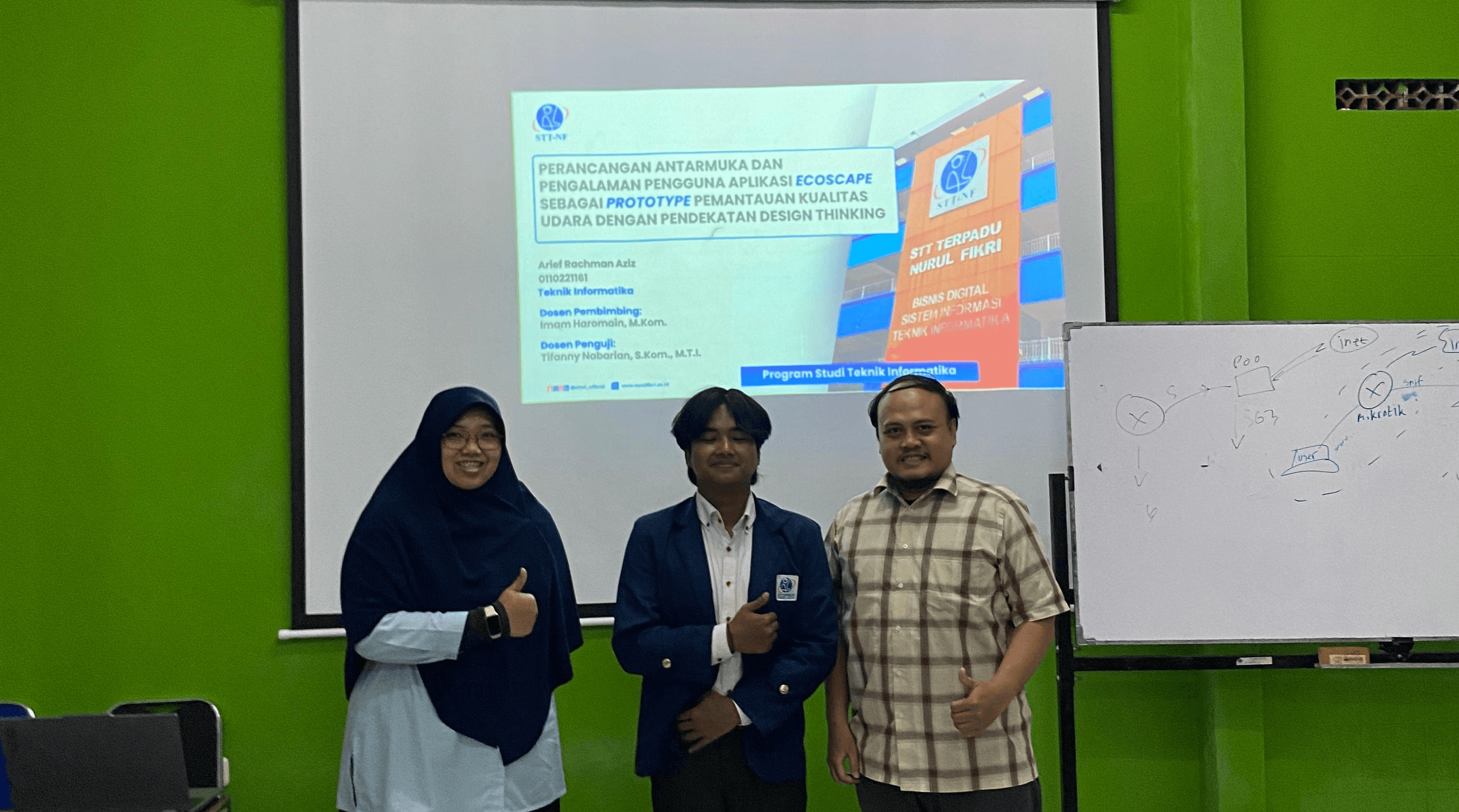
Final graduate thesis project that developed the UI/UX design of Ecoscape, a mobile app for real-time air quality monitoring. The project explored problem-solving in public health awareness, applying design thinking, iterative prototyping, and user testing to deliver an intuitive interface and engaging user experience
Year :
2025
Industry :
Creative
Client :
Educational Purpose
Project Duration :
3 weeks

Problem :
In Hayati Jaya Property Indo, the main problem was the lack of a modern and functional digital presence. Their website was outdated, visually monotonous, and difficult to navigate, which led to low user engagement and limited trust from potential buyers. On the other hand, the Ecoscape project posed a different kind of challenge: how to transform complex data about air quality into a clear, interactive, and user-friendly interface. The idea came from the realization that many people are unaware of the air quality around them, even though it directly affects their health.
Solution :
To address Hayati Jaya Property Indo’s needs, I redesigned the website with a clean layout, better property categorization, and interactive features such as filtering and responsive design. For Ecoscape, I built a mobile-first application that visualized air quality data through simple color-coded indicators and easy-to-read charts. The design included educational elements, guiding users not only to understand the current conditions but also to take preventive actions. This mix of functionality and clarity allowed both projects to deliver real value to their users.


Challenge :
One of the toughest challenges during Hayati Jaya Property Indo was reconciling the client’s request for extensive property information with the principle of simplicity in UX design. At Ecoscape, the challenge was different: translating highly technical data into something digestible and visually engaging. I also went through multiple iterations and revisions during the Ecoscape project because the first designs were either too academic or lacked visual appeal, forcing me to rethink how to balance data accuracy with a friendly interface.
Summary :
Working on these projects taught me that UI/UX design is not only about aesthetics but about empathy—understanding users, simplifying complexity, and balancing functionality with clarity. The internship project improved my ability to align business needs with professional digital presence, while the Ecoscape project pushed me to think critically about how design can raise awareness of environmental issues. Both experiences shaped me into a designer who sees challenges not as obstacles but as opportunities to build impactful solutions.
More Projects

UI / UX Design
Blending Business and Sustainability
Final graduate thesis project that developed the UI/UX design of Ecoscape, a mobile app for real-time air quality monitoring. The project explored problem-solving in public health awareness, applying design thinking, iterative prototyping, and user testing to deliver an intuitive interface and engaging user experience
Year :
2025
Industry :
Creative
Client :
Educational Purpose
Project Duration :
3 weeks
Problem :
In Hayati Jaya Property Indo, the main problem was the lack of a modern and functional digital presence. Their website was outdated, visually monotonous, and difficult to navigate, which led to low user engagement and limited trust from potential buyers. On the other hand, the Ecoscape project posed a different kind of challenge: how to transform complex data about air quality into a clear, interactive, and user-friendly interface. The idea came from the realization that many people are unaware of the air quality around them, even though it directly affects their health.
Solution :
To address Hayati Jaya Property Indo’s needs, I redesigned the website with a clean layout, better property categorization, and interactive features such as filtering and responsive design. For Ecoscape, I built a mobile-first application that visualized air quality data through simple color-coded indicators and easy-to-read charts. The design included educational elements, guiding users not only to understand the current conditions but also to take preventive actions. This mix of functionality and clarity allowed both projects to deliver real value to their users.
Challenge :
One of the toughest challenges during Hayati Jaya Property Indo was reconciling the client’s request for extensive property information with the principle of simplicity in UX design. At Ecoscape, the challenge was different: translating highly technical data into something digestible and visually engaging. I also went through multiple iterations and revisions during the Ecoscape project because the first designs were either too academic or lacked visual appeal, forcing me to rethink how to balance data accuracy with a friendly interface.
Summary :
Working on these projects taught me that UI/UX design is not only about aesthetics but about empathy—understanding users, simplifying complexity, and balancing functionality with clarity. The internship project improved my ability to align business needs with professional digital presence, while the Ecoscape project pushed me to think critically about how design can raise awareness of environmental issues. Both experiences shaped me into a designer who sees challenges not as obstacles but as opportunities to build impactful solutions.
More Projects
UI / UX Design
Blending Business and Sustainability
Final graduate thesis project that developed the UI/UX design of Ecoscape, a mobile app for real-time air quality monitoring. The project explored problem-solving in public health awareness, applying design thinking, iterative prototyping, and user testing to deliver an intuitive interface and engaging user experience
Year :
2025
Industry :
Creative
Client :
Educational Purpose
Project Duration :
3 weeks
Problem :
In Hayati Jaya Property Indo, the main problem was the lack of a modern and functional digital presence. Their website was outdated, visually monotonous, and difficult to navigate, which led to low user engagement and limited trust from potential buyers. On the other hand, the Ecoscape project posed a different kind of challenge: how to transform complex data about air quality into a clear, interactive, and user-friendly interface. The idea came from the realization that many people are unaware of the air quality around them, even though it directly affects their health.
Solution :
To address Hayati Jaya Property Indo’s needs, I redesigned the website with a clean layout, better property categorization, and interactive features such as filtering and responsive design. For Ecoscape, I built a mobile-first application that visualized air quality data through simple color-coded indicators and easy-to-read charts. The design included educational elements, guiding users not only to understand the current conditions but also to take preventive actions. This mix of functionality and clarity allowed both projects to deliver real value to their users.
Challenge :
One of the toughest challenges during Hayati Jaya Property Indo was reconciling the client’s request for extensive property information with the principle of simplicity in UX design. At Ecoscape, the challenge was different: translating highly technical data into something digestible and visually engaging. I also went through multiple iterations and revisions during the Ecoscape project because the first designs were either too academic or lacked visual appeal, forcing me to rethink how to balance data accuracy with a friendly interface.
Summary :
Working on these projects taught me that UI/UX design is not only about aesthetics but about empathy—understanding users, simplifying complexity, and balancing functionality with clarity. The internship project improved my ability to align business needs with professional digital presence, while the Ecoscape project pushed me to think critically about how design can raise awareness of environmental issues. Both experiences shaped me into a designer who sees challenges not as obstacles but as opportunities to build impactful solutions.